EPDM Rubber Roof Repair: A Property Owner’s Complete Maintenance and Repair Guide
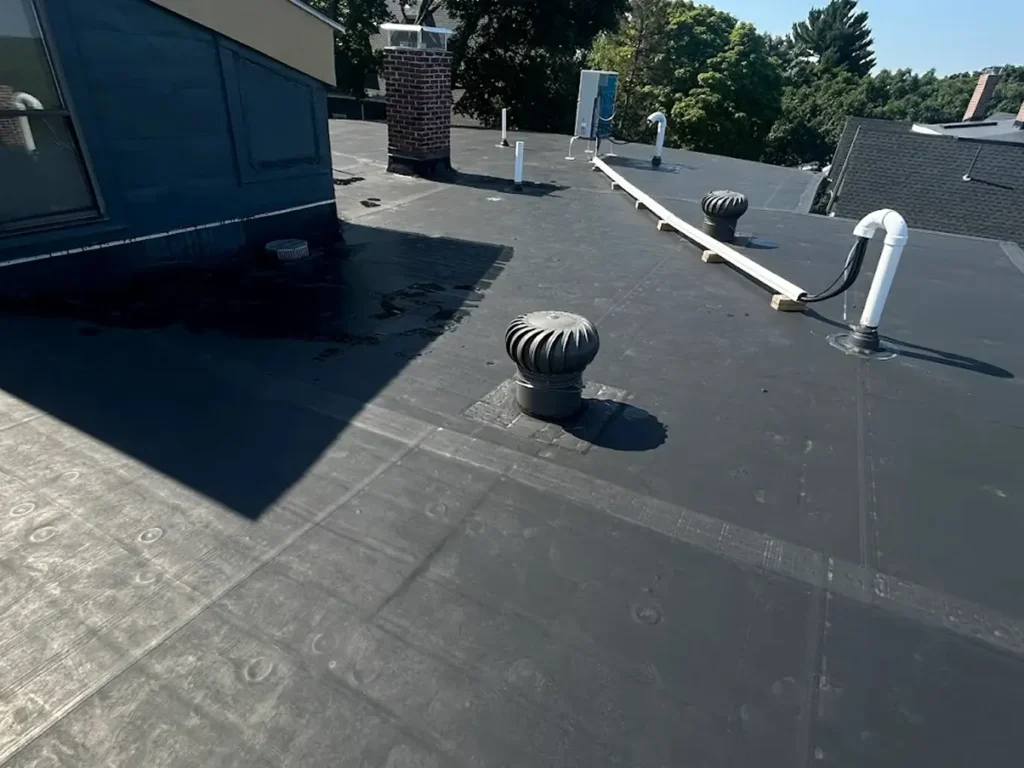
Rubber roofing has protected commercial buildings and flat-roof properties for decades. If you have an EPDM roofing system, you know it’s durable and cost-effective. But even the best rubber roofs need attention over time.
Let’s break down what you need to know about keeping your rubber membrane in good shape.
Understanding Your EPDM Roofing System
EPDM stands for Ethylene Propylene Diene Monomer; therefore most people call it rubber roofing. This single-ply membrane comes in large black sheets that get joined together to cover your roof.
Your roof is probably installed one of three ways: ballasted (held down with rocks or pavers), mechanically fastened (screwed down with plates), or fully adhered (glued directly to the roof deck). Each type has different repair needs.
Common Rubber Roof Problems
Seam Failure and EPDM Seam Repair
The biggest weak spot on any rubber roof is where two pieces meet. These seams can separate over time as the adhesive bonding breaks down. Temperature changes cause thermal expansion; the rubber expands and contracts, putting stress on these connection points.
If you notice the seams pulling apart or see water stains running in lines on your ceiling, you need EPDM seam repair right away.
Membrane Shrinkage
Over years of heating and cooling, your rubber membrane can actually shrink. It pulls away from the edges or gets too tight across the roof surface. This creates weak points that eventually crack or tear.
Ponding Water Issues
Flat rubber roofs need some slope for drainage. When water sits in puddles for more than two days after rain, that’s ponding water. It speeds up UV degradation and weakens your rubber membrane, making leaks more likely.
Physical Damage
Branches, hail, foot traffic, and dropped tools all damage rubber roofing. These punctures need quick rubber roof patch repairs before they turn into major leaks.
How Rubber Roof Repair Actually Works
Surface Preparation
You can’t just slap a patch over damage and call it fixed. Proper rubber roof leak repair starts with thorough cleaning. We remove dirt, that chalky white residue that forms on aging EPDM, and any loose material. The area must be completely dry, trapped moisture under a patch causes failure within weeks.
For bigger repairs, primer application helps new materials bond to the old rubber membrane. This step makes all the difference in how long your repair lasts.
Small Repairs with Rubber Roof Patch
For small punctures or tears, we use EPDM primer and a rubber patch that extends at least three inches past the damage on all sides. The edges get sealed with lap sealant to keep water out. This type of EPDM puncture repair works great for isolated damage.
EPDM Seam Repair Process
Fixing failed seams takes more work. We remove old adhesive, clean both edges thoroughly, apply new adhesive or rubber roof seam tape, and properly seal the joint. Good membrane adhesion needs time to cure, rushing this causes problems later.
EPDM Roof Coating for Widespread Damage
When UV damage affects your entire roof, individual patches won’t help much. That’s when EPDM roof coating makes sense. This elastomeric coating protects against UV rays while sealing minor surface cracks. A quality rubber roof coating can add ten to fifteen years to your roof’s life.
Commercial Rubber Roof Repair Considerations
Most rubber roofs cover commercial buildings, and commercial rubber roof repair has higher stakes. You’re protecting inventory, equipment, and business operations.
Commercial roofs also see more traffic from HVAC maintenance, equipment installations, and general upkeep. This means more wear and faster degradation around high-traffic areas.
Preventing Problems with Rubber Roof Maintenance
Most rubber roof repairs could be avoided with basic rubber roof maintenance. Here’s what matters:
- Regular Inspections; Check your EPDM roofing system twice yearly, in spring and fall. Look for loose seams, punctures, ponding water areas, and signs of membrane shrinkage. Catching small issues early prevents expensive rubber roof leak repair later.
- Keep It Clean; Debris traps moisture against your rubber membrane and speeds up breakdown. Regular cleaning and keeping drains clear makes a huge difference.
- Quick Action on Small Problems; A small tear needing a simple rubber roof patch today becomes major damage requiring extensive membrane replacement next year. Don’t wait.
When Full Restoration Makes Sense
Sometimes repair isn’t enough. If you’re seeing multiple seam failures, widespread cracking, and significant membrane shrinkage, consider full rubber roof restoration.
A complete roof coating application can work if the membrane underneath is still solid. You’re creating a fresh protective layer over existing rubber. For roofs fifteen to twenty years old, this often beats complete replacement.
Professional EPDM Rubber Roof Repair
Small puncture repairs might be DIY-friendly if you’re comfortable working safely on your roof and follow instructions carefully.
But if you are looking for seam repair work, large damaged areas, anything involving flashing, or coating application, calling Boston Roof Repair Company is the best option.
Proper weatherproofing and adhesive bonding techniques take experience. A patch done wrong fails quickly and water damage inside costs way more than professional repair from the start.
The Bottom Line
Your EPDM rubber roof repair needs depend on catching problems early and fixing them right. Regular inspections, quick attention to small issues, and knowing when to call professionals keeps your single-ply membrane protecting your property for decades.